
PIE’s latest webinar flags fresh supply-chain risks arising from the Middle East conflict
PIE’s 31 March webinar, Iran War & The Plastics Crisis, underlined how the conflict in the Middle East is adding another layer of uncertainty to Europe’s plastics and chemicals value chain. Speaker Dimitrios Koranis, industry expert and managing director of Koranis Purchasing Solutions, said any disruption to energy, feedstock and shipping routes could quickly feed through to costs, availability, and procurement decisions across the sector.
 (Screenshot: PIE) (Screenshot: PIE) |
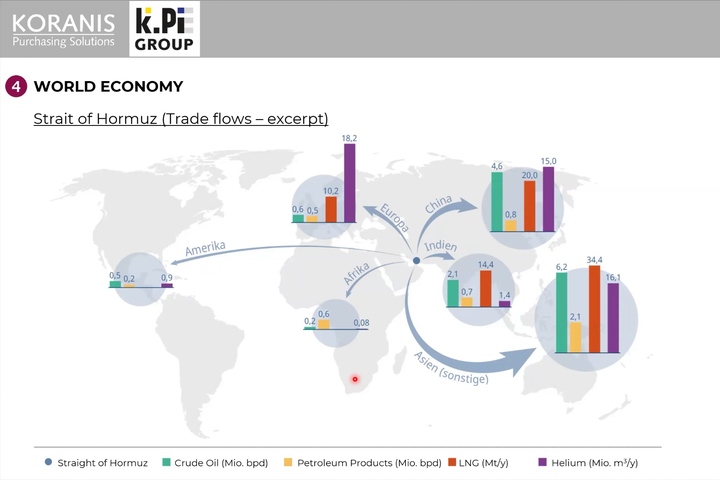
The discussion – moderated by PIE Editor-in-Chief Somya Abrol and attended by over 420 industry players from all over the globe – focused in particular on the strategic importance of the Strait of Hormuz, a key chokepoint for global crude oil and LNG flows. Against that backdrop, the webinar examined how tighter supply conditions could affect naphtha, polymer pricing, and freight, while also increasing pressure on an industry that is already dealing with weak demand and fragile margins.
The presentation also pointed to a difficult operating environment in Europe’s chemical and plastics markets, with production, order intake, and capacity utilisation under strain. In that context, the Middle East conflict was presented not as an isolated geopolitical event, but as a potential accelerator of existing cost and competitiveness problems.
For European plastics producers and processors, the key message was clear: the market remains highly exposed to external shocks, and any prolonged disruption could further unsettle supply chains and pricing across the value chain.
In case you missed the webinar on 31 March, the recording of the event is now available:
This article appeared on the 8th of April 2026 at PIE Web (Plastics-Information Europe)